Research
Species extinction & persistence in cities
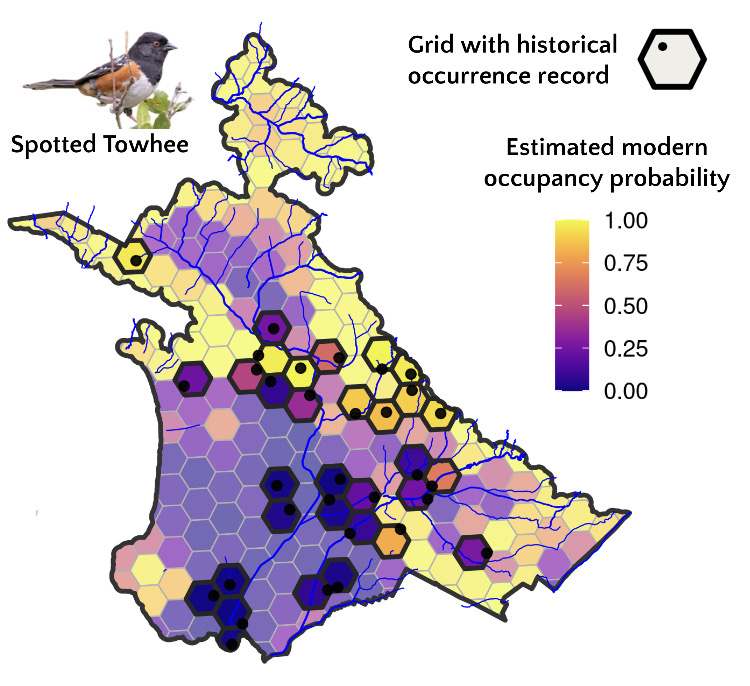
Urbanization can have severe negative impacts on biodiversity, yet cities also support diverse species assemblages, including many species of conservation concern. But how durable are these populations? Are cities capable of sustaining native species over long periods of time? To help answer these questions, I am analyzing century-scale changes in urban bird communities by pairing historical specimen data held in natural history collections with contemporary data from the eBird community-science database. The work is helping to reveal the ecological history of cities, shedding light on the the specific factors that promote the persistence of species in urban ecosystems, and advancing models of urban species distributions fit with large community-science datasets. Early work on this topic has focused on Greater Los Angeles in collaboration with the LA Landscape History Project.
Rebuilding urban animal communities
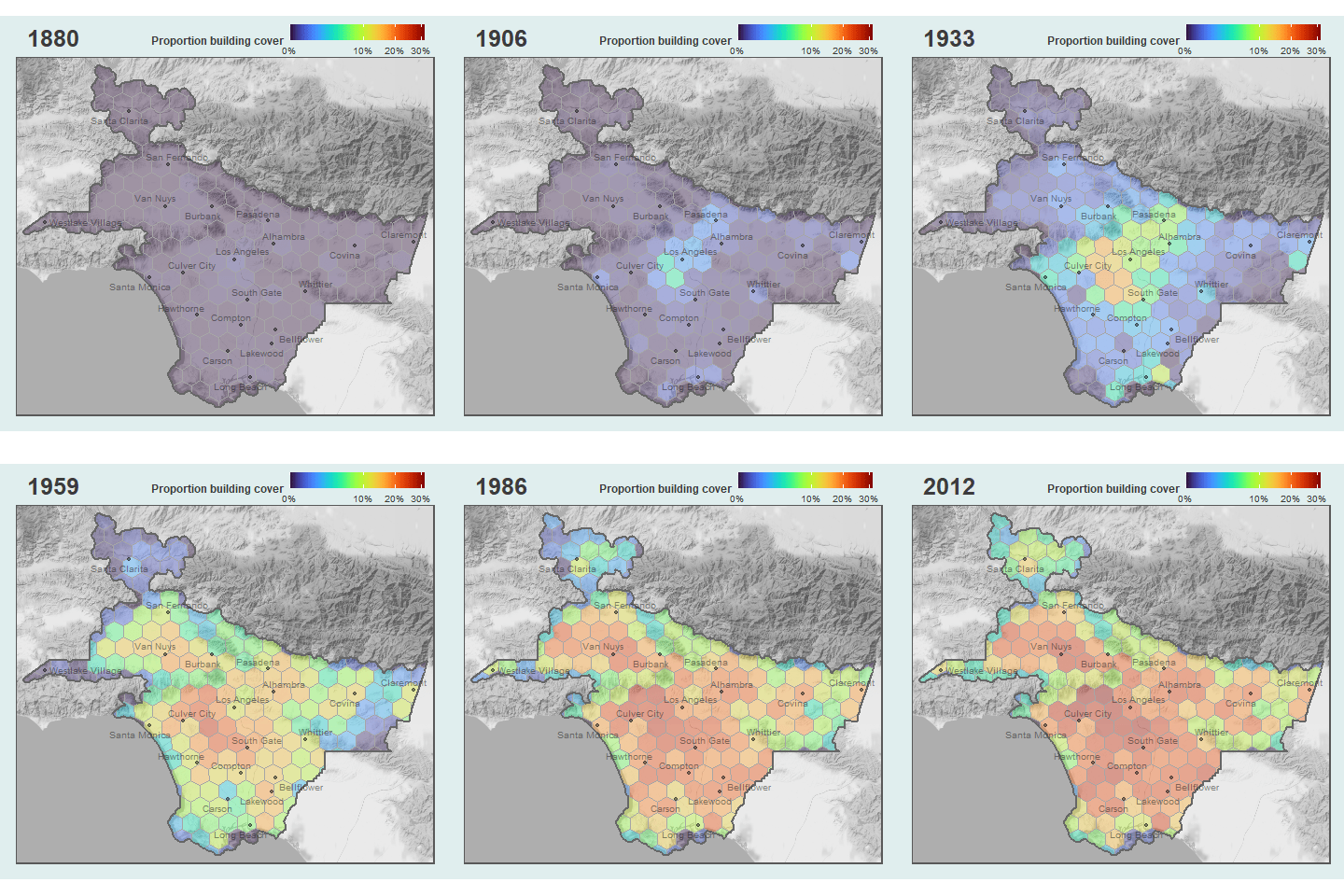
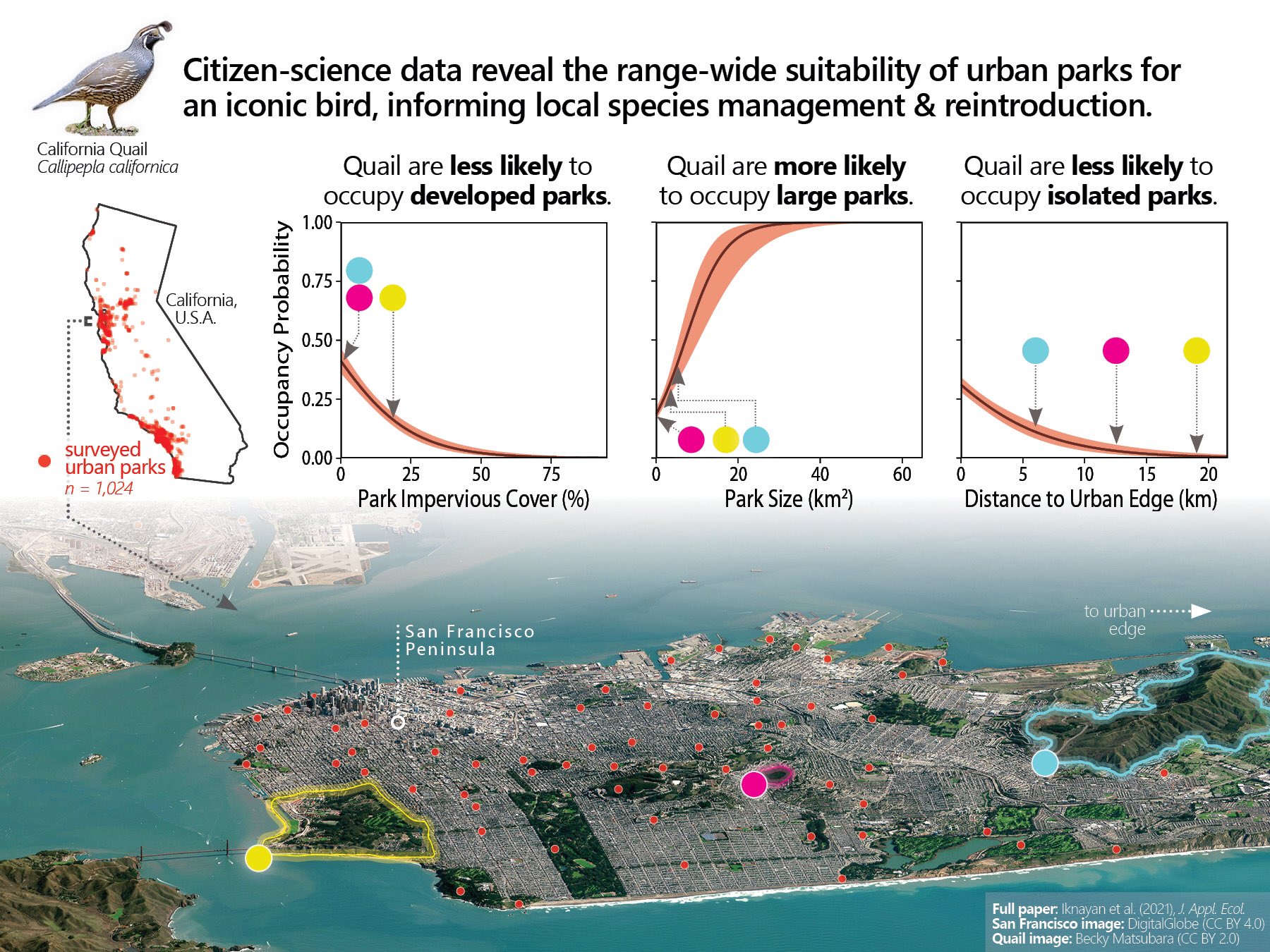
Urban change has led to local, regional, and global loss of numerous native species over time. Reversing these declines and rebuilding urban biodiversity is a growing priority because of its importance to ecosystem and human health. Understanding how environmental conditions in cities have changed over time can help with this task by elucidating the causes of species declines and illuminating potential strategies to reverse these losses. I am particularly interested in identifying ways cities change that increase the potential for the recolonization, reintroduction, and recovery of animal species. Examples include the regrowth of urban forests, changes in building materials and transportation networks, reductions in hunting within city limits, reductions in contaminants, and changes in urban predator communities. With colleagues at SFEI and in partnership with the Presidio Trust, I have helped to advance applied data-driven approaches for urban animal reintroductions by using eBird data to understand the factors driving the occupancy of urban parks by California Quail and to assess the potential for their reintroduction to green spaces in San Francisco.
- Iknayan, Wheeler, Safran, et al. 2021. What makes urban parks good for California quail? Evaluating park suitability, species persistence, and the potential for reintroduction into a large urban national park. Journal of Applied Ecology.
Quantifying functional changes in ecosystems at landscape scales
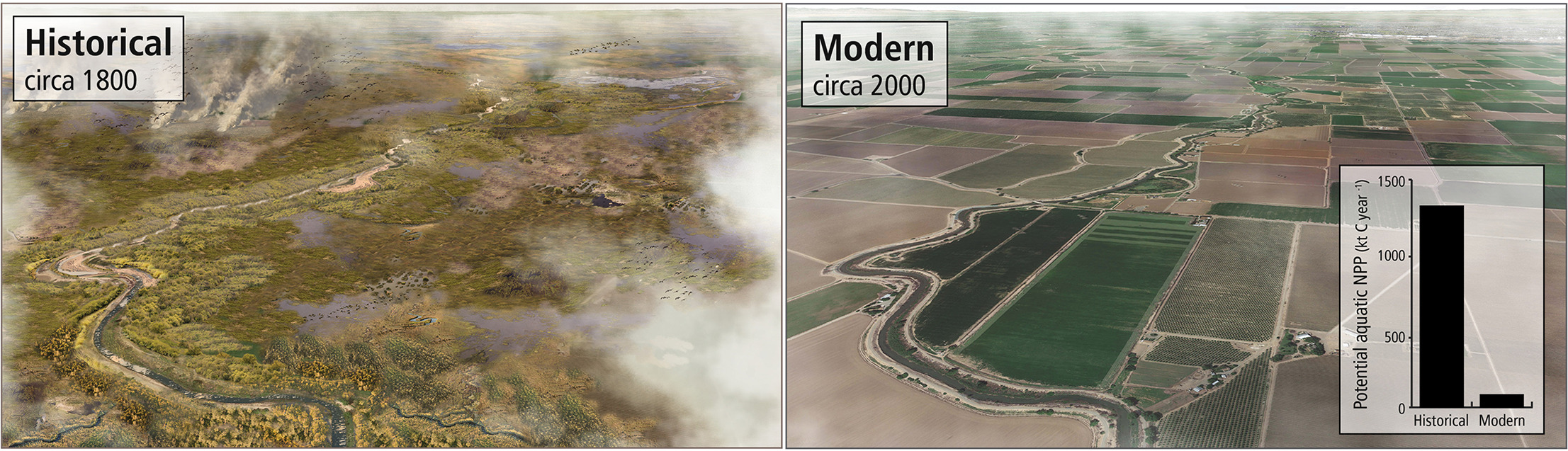
Land-use change is the largest current driver of global biodiversity loss. A clear understanding of how land-use change alters ecosystem functions is key to knowing its effects on species. My work in the California Delta translates maps of land-cover into quantitative estimates of changes in net primary production (the generation of organic carbon that fuels much of life on Earth). The research has shown that the amount of amount of organic carbon available to aquatic foodwebs in the Delta has declined by ~95% since European colonization and that landscape change has restructured the primary producer community. Finally, the framework has been used to predict how climate change and possible restoration actions are likely to affect primary production in the future. In this way, the work is advancing our ability to incorporate metrics of ecosystem function into land use and conservation planning efforts.
- Cloern, Safran, et al. 2020. On the human appropriation of wetland primary production. Science of the Total Environment.
- Boyer, Safran, et al. 2023. Landscape transformation and variation in invasive species abundance drive change in primary production of aquatic vegetation in the Sacramento-San Joaquin Delta. San Francisco Estuary and Watershed Science.